 WHOIS
WHOIS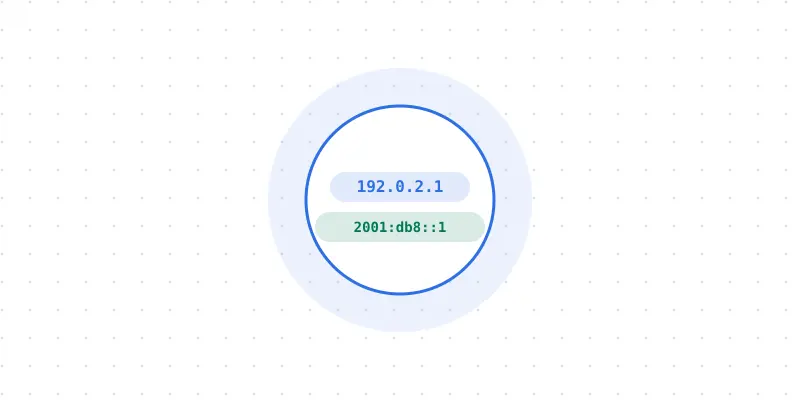
Every device connected to the internet needs an address so traffic knows where to go — that's what an IP address is. There are two versions of this addressing system in active use today: IPv4 and IPv6.
IPv4
IPv4 is the original addressing system, using addresses like 192.0.2.1 — four numbers from 0–255, separated by dots. This gives roughly 4.3 billion possible addresses, which sounded like more than enough when the format was designed decades ago. It wasn't: the pool of available IPv4 addresses has effectively run out, which is the entire reason IPv6 exists.
IPv6
IPv6 uses a much larger address format, like 2001:4860:4860::8888 — eight groups of hexadecimal digits, separated by colons (with consecutive zero groups often compressed using ::). The available address space is vast enough that exhaustion isn't a realistic concern.
Practical differences
| IPv4 | IPv6 | |
|---|---|---|
| Example | 192.0.2.1 | 2001:db8::1 |
| Address space | ~4.3 billion | Effectively unlimited |
| Adoption | Universal, but constrained | Growing, not yet universal |
| Private ranges | 10.0.0.0/8, 172.16.0.0/12, 192.168.0.0/16 | fc00::/7 (unique local) |
Most modern networks and devices support both simultaneously (called "dual-stack") — a single domain's DNS records often include both an A record (IPv4) and an AAAA record (IPv6), and which one gets used for a given connection depends on the client and network.
How to check it yourself
Our IP Lookup tool accepts either format automatically. To see both address types a domain publishes, use our DNS Lookup tool and check its A and AAAA records.